Reading your baby’s head shape
Your chiropractor measured your baby’s head and gave you a sheet with two numbers. This page explains what those numbers mean, why the timing matters, and what care looks like during the window when it makes the most difference.
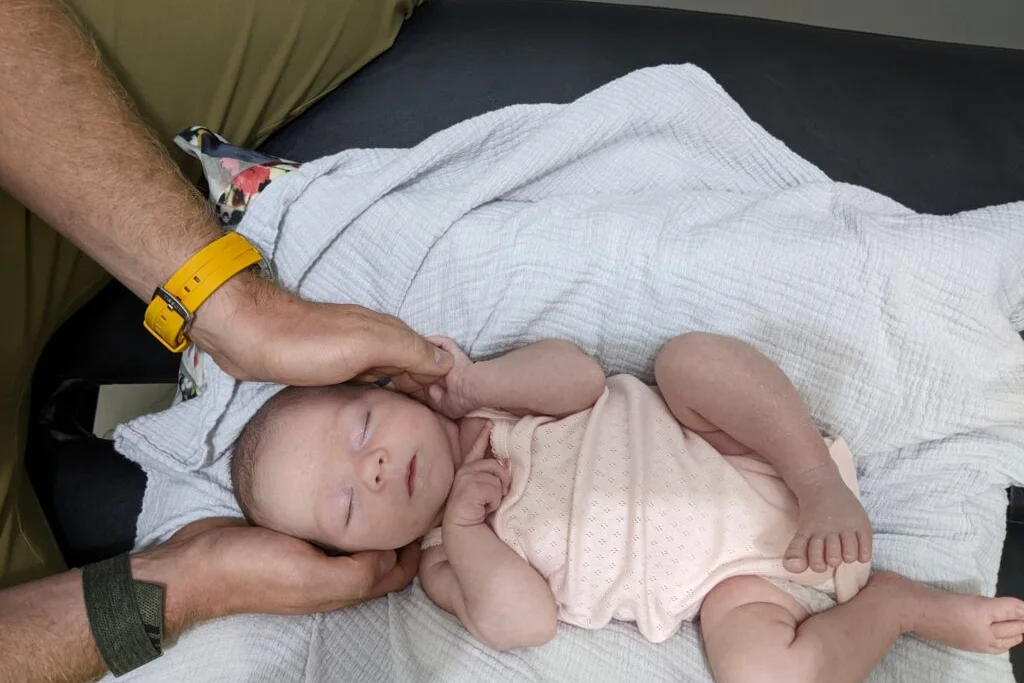
What you measured
These two measurements do more than describe head shape. They reflect how the jaw, palate, and nervous system are developing alongside the skull. A craniopathy-trained chiropractor reads these numbers with all of that context in mind.
CVAI
Measures side-to-side asymmetry. Catches flat spots and shifting patterns before they become obvious. Reported as a percentage — lower is more symmetric.
CI
Measures overall proportion: long and narrow, balanced, or short and wide. Reported as a percentage. It tells you the ratio of width to length, not severity.
What the numbers mean
Severity bands come from published clinical scales. The label describes the pattern. Your chiropractor reads it alongside your baby’s history, posture, and milestones to understand the full picture.
CVAI — asymmetry
| Label | Range | What it means |
|---|---|---|
| Balanced | < 3.5% | Both sides match closely. Care from a craniopathy-trained chiropractor at this stage supports nervous system development and helps maintain this balance through the growth window. |
| Mild | 3.5 – 6.25% | Slight side-to-side difference. A craniopathy-trained chiropractor, combined with positioning and tummy time guidance, gives the best support for improvement at this stage. |
| Moderate | 6.25 – 8.75% | Noticeable asymmetry. 6.25% is the helmet-therapy consideration threshold. Care from a craniopathy-trained chiropractor focused on subluxation often reduces measurements before that threshold is reached. Earlier support means more options. |
| Severe | 8.75 – 11% | Active intervention is the standard recommendation. A craniopathy-trained chiropractor addresses the underlying subluxation driving the asymmetry and works alongside any other care your team recommends. |
| Very severe | ≥ 11% | A craniopathy-trained chiropractor works alongside a craniofacial team to give your baby the most complete support. |
CI — head shape
| Label | Range | What it means |
|---|---|---|
| Long and narrow | < 76 | Longer front-to-back than typical. A craniopathy-trained chiropractor assesses the subluxation contributing to this proportion and supports the skull's natural remodeling during the growth window. |
| Typical | 76 – 81 | Within the proportionate range. Care from a craniopathy-trained chiropractor supports nervous system development and helps protect this balance as your baby grows. |
| Short and wide | 81 – 85.5 | Wider side-to-side, often associated with prolonged back-laying. A craniopathy-trained chiropractor addresses the subluxation contributing to this shape and supports repositioning efforts. |
| Very short and wide | ≥ 85.5 | Pronounced flat-back proportion. A craniopathy-trained chiropractor is a central part of the care picture at this stage, working to address the underlying patterns alongside any other recommendations. |
A craniopathy-trained chiropractor brings a layer of assessment that goes beyond what most routine visits are designed to catch. The number your chiropractor measured is one piece. Your baby’s full history tells the rest.
Why head shape matters
Head shape changes are not just cosmetic. They reflect deeper patterns of subluxation that often show up as:
- Mouth breathing, snoring, or congestion
- Feeding difficulties and reflux
- Torticollis or a strong head-turning preference
- Sensory or emotional dysregulation
- Delayed milestones, restless sleep, or trouble self-soothing
When these patterns are addressed early, the downstream effects change. The same subluxation that shapes the skull also influences how your baby feeds, sleeps, and moves through early development. Catching it early matters.
The same patterns, when left without support, can carry into later childhood as orthodontic problems, speech delays, or TMJ dysfunction.
The growth window
Care can begin from birth, and starting early gives your baby the most options.
The posterior fontanelle, the soft spot at the back of the skull, closes between 2 and 4 months. This is the earliest and most responsive window for cranial care. The skull continues to develop and remodel well beyond that point, but the patterns established in these first months set the foundation for everything that follows.
A craniopathy-trained chiropractor monitors progress through this window, adjusts the care plan as your baby grows, and gives you clear guidance at every step. The earlier care begins, the more the body can do with it.
When care is needed
Signs that need same-day medical care
The signs below are different from positional head shape changes. They need same-day evaluation by your pediatrician or an emergency room.
- A soft spot (fontanelle) that looks bulging, sunken, or unusually tense
- Rapid changes in head size over days or a week
- Vision changes, persistent eye crossing, or eyes that do not track together
- Repeated vomiting, feeding refusal, or unusual sleepiness or limpness
- A seizure or any sudden change in alertness
If you notice any of these, call your pediatrician today or go to an emergency room. These signs can point to conditions that need urgent medical evaluation.
Signs a cranial assessment can help with
A craniopathy-trained chiropractor can assess and often help with patterns that may not get a clear answer in a routine pediatric visit. These include:
- An asymmetric or flattened head shape
- A strong head-turning preference or neck tightness on one side
- A ridge along the skull where the bones meet (this needs evaluation to distinguish positional patterns from craniosynostosis; both are part of a thorough cranial exam)
- Facial asymmetry that goes with head shape changes
- Feeding difficulties, reflux, or restless sleep that show up alongside the head shape
These patterns respond well to early, focused care from a craniopathy-trained chiropractor.
What to do next
Bring your measurement sheet to your next visit. Your chiropractor can walk you through what the pattern means specifically for your baby and what care looks like from here.
Early care typically includes a hands-on assessment of the cranial bones and upper neck, guidance on positioning and tummy time, support for feeding and sleep, and follow-up measurements to track progress through the growth window.
Your baby’s history, movement, and posture give these numbers their full meaning. Come to your next visit with your questions.